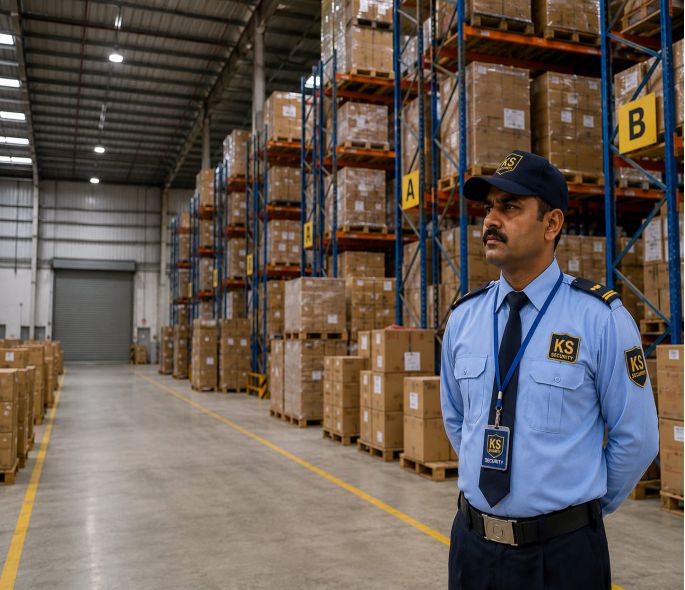
Warehouse Security Challenges and Solutions in Rajasthan
A Comprehensive Guide to Protecting Warehouses, Inventory, People and Supply Chains
Warehouses have become an increasingly important part of Rajasthan’s industrial and logistics ecosystem.
From Jodhpur, Jaipur and Bhiwadi to Neemrana, Alwar, Bhilwara, Kota, Udaipur, Ajmer, Bikaner and Pali, warehouses support manufacturing, retail, e-commerce, logistics, agriculture, pharmaceuticals, engineering, textiles, minerals and many other sectors.
The Government of Rajasthan identifies significant opportunities in technology-enabled warehousing, cold storage, air cargo facilities, dry ports, inland container depots and multimodal logistics hubs. Rajasthan also has more than 415 industrial parks spread across approximately 51,500 acres of industrial land.
With the growth of warehousing and logistics, warehouse security has become a critical business requirement.
A warehouse does not simply store products. It protects valuable inventory and acts as a critical link between manufacturing, transportation, distribution and customers.
Therefore, warehouse security should be based on a comprehensive approach:
Prevent → Deter → Detect → Respond → Recover → Improve
Why Warehouse Security Is Important
A warehouse may contain valuable:- Raw materials
- Finished products
- Spare parts
- Electronics
- Machinery
- Pharmaceuticals
- Food products
- Textiles
- Consumer goods
- Packaging materials
- Documents
- High-value inventory
A security incident can result in:
- Inventory loss
- Theft
- Fire damage
- Unauthorized access
- Supply-chain disruption
- Financial losses
- Insurance complications
- Customer dissatisfaction
- Reputational damage
For this reason, professional warehouse security services in Rajasthan should combine trained security personnel, technology, access control, documentation, supervision and emergency preparedness.
Top 10 Warehouse Security Challenges in Rajasthan
1. Unauthorized Entry and Poor Access Control
Warehouses can have a continuous movement of:- Employees
- Drivers
- Transporters
- Contractors
- Vendors
- Visitors
- Loading/unloading workers
- Maintenance personnel
Solutions :
A professional warehouse security system should include:
- Security guards at entry gates
- Employee ID verification
- Visitor registration
- Visitor passes
- Contractor verification
- Driver verification
- Vehicle entry records
- Restricted-area access
- CCTV surveillance
- Gate-pass control
- Security supervisor inspections
2. Theft and Inventory Shrinkage
Inventory theft is one of the most significant warehouse-security concerns.Losses may occur through:- Unauthorized removal of goods
- False documentation
- Material substitution
- Collusion
- Unauthorized loading
- Theft during dispatch
- Theft from storage areas
- Scrap manipulation
Solutions : Warehouse security should integrate:Physical Security + Access Control + CCTV + Documentation + Inventory ControlsSecurity personnel should verify relevant:
- Gate passes
- Delivery challans
- Vehicle details
- Driver identity
- Material descriptions
- Loading instructions
- Dispatch authorization
3. Vehicle and Loading-Bay Security
The loading and unloading area is one of the most vulnerable points in a warehouse.Large numbers of vehicles may enter and leave the facility every day.Potential risks include:- Unauthorized vehicles
- Incorrect vehicle details
- Material discrepancies
- Unauthorized loading
- Unauthorized unloading
- Driver impersonation
- Documentation errors
- Congestion and safety issues
Solutions : A structured vehicle-security system should follow:Vehicle Identification → Driver Verification → Entry Authorization → Loading Control → Documentation → Exit VerificationSecurity personnel should maintain appropriate vehicle and material records.CCTV coverage should also be provided for loading and dispatch areas based on the warehouse’s risk assessment.
4. CCTV Blind Spots and Surveillance Gaps
CCTV is an important part of modern warehouse security services, but cameras are effective only when properly planned, maintained and monitored.Common weaknesses include:- Poor camera positioning
- Blind spots
- Poor night visibility
- Non-functional cameras
- Recording failures
- Inadequate storage of recordings
- Unmonitored critical areas
Critical CCTV Locations
Depending on the warehouse layout and risk profile:
- Main entrance
- Employee entrance
- Vehicle gate
- Loading bays
- Dispatch area
- Warehouse aisles
- High-value storage areas
- Parking area
- Perimeter
- Emergency exits
- Sensitive operational areas
5. Perimeter Security and Intrusion
Large warehouses may have extensive boundaries, particularly in industrial and logistics areas.Potential vulnerabilities include:- Weak boundary walls
- Uncontrolled side entrances
- Poor lighting
- Blind spots
- Open access points
- Inadequate night patrols
- Isolated storage areas
Solutions : A layered perimeter-security system can include:Boundary Protection + Lighting + CCTV + Patrols + Access ControlSecurity supervisors should periodically inspect the perimeter and identify new vulnerabilities.
6. Fire and Emergency Risks
Warehouse fires can result in extensive inventory and infrastructure losses.The risk can increase where warehouses contain combustible packaging, textiles, paper products, plastics, electrical equipment or other materials requiring specific fire-safety controls.Solutions : Warehouse management should maintain appropriate:
- Fire detection systems
- Fire alarms
- Fire extinguishing arrangements
- Emergency exits
- Evacuation routes
- Emergency lighting
- Assembly points
- Fire-equipment inspections
- Emergency communication procedures
- Fire drills
7. Insider Threats and Contractor Risks
Warehouse security is not only about protecting against external threats.Employees, contractors or temporary workers can also create security vulnerabilities, whether deliberately or unintentionally.Potential risks include:- Unauthorized access
- Material removal
- Unauthorized photography
- Sharing access credentials
- Access to restricted storage areas
- Misuse of company property
- Information leakage
Solutions :
Warehouses should establish:
- Role-based access
- Contractor verification
- Restricted areas
- Visitor controls
- Security awareness
- Appropriate exit procedures
- Incident reporting
- Periodic security audits
8. Damage, Sabotage and Critical Asset Risks
Warehouses depend on important infrastructure such as:- Electrical systems
- Material-handling equipment
- Loading systems
- IT infrastructure
- CCTV systems
- Fire-safety systems
- Access-control systems
- Communication systems
Best Suitable Solution :
Warehouse management should identify:Critical Assets + Critical Areas + Critical ProcessesFor each critical asset, management should determine:
- What could go wrong?
- What would be the impact?
- How would the problem be detected?
- Who would respond?
- How quickly could operations recover?
9. Emergency Response and Business Continuity
A warehouse must be prepared for more than theft.Possible emergencies include:- Fire
- Industrial accidents
- Medical emergencies
- Natural events
- Equipment failure
- Power failure
- Security incidents
- Evacuation situations
Recommended Measures :
Every warehouse should have:
- Emergency Response Plan
- Emergency contact list
- Evacuation plan
- Assembly points
- Emergency communication procedure
- Incident escalation matrix
- First-aid arrangements
- Emergency access routes
- Security response procedures
- Periodic mock drills
- Post-incident review
10. Poor SOPs, Documentation and Security Supervision
A warehouse may have security guards but still remain vulnerable if there are no proper procedures.
Common weaknesses include:
- No written post orders
- Poor shift handovers
- No patrol schedule
- Incomplete visitor records
- Weak vehicle records
- Poor material gate-pass control
- No incident-reporting system
- No CCTV monitoring procedure
- Limited supervisor inspections
Essential Warehouse Security Records :
Depending on the operation, important records may include:
- Visitor Register
- Vehicle Register
- Material In/Out Register
- Gate-Pass Register
- Contractor Register
- Key Register
- Incident Register
- Shift Handover Register
- Patrol Register
- CCTV Log
- Emergency Drill Record
Documentation creates accountability and allows warehouse management to identify recurring security problems.
Special Warehouse Security Challenges in Rajasthan
Rajasthan has a geographically large industrial and logistics network.Government information highlights warehouse and logistics activity across locations such as Bhiwadi, Neemrana, Ghiloth, Jaipur, Jodhpur, Ajmer, Kota, Bhilwara and Bikaner.Different locations may therefore have different security requirements.Jodhpur and PaliWarehouses supporting manufacturing, engineering, stone, furniture, handicrafts, logistics and other industries may require strong:- Gate security
- Material security
- Vehicle control
- Perimeter protection
- CCTV surveillance
- High-volume vehicle movement
- Inventory protection
- Dispatch security
- Visitor management
- CCTV monitoring
As major industrial and NCR-linked manufacturing/logistics locations, warehouses may handle high volumes of industrial materials, components and finished goods.
Bhilwara
Textile-related warehousing requires effective inventory protection and controlled movement of valuable raw materials and finished products.
Kota
Warehouses supporting industrial, fertilizer, cement, stone and other sectors may require sector-specific risk assessment.
Bikaner
Warehousing associated with agro, wool and mineral products may require appropriate perimeter, inventory and fire-risk controls.
A Layered Warehouse Security Model
The most effective warehouse-security systems use multiple layers of protection.
Layer 1 — Risk Assessment
Identify threats, vulnerabilities and critical assets.
Layer 2 — Perimeter Security
Protect boundaries, gates and vulnerable areas.
Layer 3 — Access Control
Control employees, visitors, contractors and vehicles.
Layer 4 — Manned Guarding
Deploy trained guards with clearly defined post duties.
Layer 5 — CCTV Surveillance
Monitor critical areas and support incident detection.
Layer 6 — Inventory Protection
Control material movement, dispatch and high-value storage.
Layer 7 — Fire & Emergency Preparedness
Integrate fire prevention, emergency response and evacuation procedures.
Layer 8 — Security Supervision
Conduct inspections, shift handovers and performance reviews.
Layer 9 — Documentation
Maintain accurate security and incident records.
Layer 10 — Continuous Improvement
Conduct periodic security audits and correct identified vulnerabilities.
Warehouse Security Checklist
Warehouse management should regularly review:
Access Control
- Are visitors verified?
- Are employees properly identified?
- Are contractors controlled?
- Are restricted areas protected?
Vehicle Security
- Are vehicles verified?
- Are drivers identified?
- Are loading and unloading operations monitored?
- Are exit checks properly conducted?
Inventory Security
- Are material movements documented?
- Are high-value products separately protected?
- Are dispatches properly authorized?
CCTV
- Are cameras functioning?
- Are there blind spots?
- Are critical areas covered?
Perimeter
- Is the boundary secure?
- Is adequate lighting available?
- Are patrols being conducted?
Fire & Emergency
- Are emergency exits accessible?
- Are fire-safety systems maintained?
- Are emergency procedures understood by security staff?
Manpower
- Are guards trained?
- Are supervisors inspecting posts?
- Are shift handovers documented?
SOPs
- Are written security procedures available?
- Are incidents properly recorded?
Are periodic security audits conducted?
How Professional Security Guards Improve Warehouse Security
Security guards are the foundation of physical warehouse security.
A professionally trained guard can perform functions such as:
- Gate control
- Visitor management
- Vehicle verification
- Material gate-pass checking
- Perimeter patrolling
- Access control
- Incident reporting
- CCTV monitoring support
- Emergency communication
- Fire-response support
- Crowd and traffic management
- Security documentation
However, effective warehouse security requires more than simply increasing guard numbers.
The correct manpower deployment should be based on:
Risk Assessment + Warehouse Size + Number of Gates + Operating Hours + Material Value + Vehicle Movement + Critical Areas + Threat Profile
Why Choose a Professional Security Agency in Jodhpur and Rajasthan?
Warehouses operate throughout Rajasthan’s industrial and logistics network. A professional security agency in Jodhpur should understand the local operating environment and be capable of designing security arrangements around the client’s specific requirements.
Similarly, businesses searching for a security agency in Rajasthan should evaluate more than the quoted manpower cost.
Important selection criteria include:
- Professional training
- Security supervision
- Proper documentation
- Background verification
- Site-specific SOPs
- Emergency preparedness
- Technology integration
- Replacement manpower arrangements
- Management support
- Regular inspections
- Client reporting
The objective should be to select a security partner capable of protecting the warehouse as an integrated business asset.
Conclusion
Warehouse security is an essential component of modern supply-chain management.
The major risks—unauthorized access, inventory theft, vehicle-related risks, CCTV gaps, perimeter intrusion, fire, insider threats, sabotage, emergency-response failures and poor SOP compliance—can directly affect a company’s financial performance and reputation.
A strong warehouse-security programme should therefore combine:
Risk Assessment + Trained Security Guards + Access Control + CCTV + Perimeter Protection + Material Control + Fire & Emergency Preparedness + SOPs + Supervision + Security Audits
Recommended Security Partner: KS INTEGRATED SECURITY & SUPPORT SERVICES
For businesses looking for a professional security agency in Jodhpur and Rajasthan, KS INTEGRATED SECURITY & SUPPORT SERVICES can provide a comprehensive approach to warehouse and industrial security.
Based in Jodhpur, KS INTEGRATED SECURITY & SUPPORT SERVICES can develop security solutions according to the specific requirements of:
- Warehouses
- Logistics facilities
- Industrial units
- Manufacturing plants
- Distribution centres
- Commercial properties
- Institutions
- Corporate facilities
Security solutions can include:
✓ Trained Security Guards
✓ Security Supervisors
✓ Warehouse Security
✓ Industrial Security
✓ Gate & Access Control
✓ Visitor Management
✓ Vehicle & Material Control
✓ CCTV Monitoring Support
✓ Perimeter Patrolling
✓ Asset Protection
✓ Emergency Response Support
✓ Site-Specific SOPs
✓ Security Inspection & Supervision
The right warehouse-security strategy is not about simply putting a guard at the gate.
It is about creating a layered security system that prevents unauthorized access, protects inventory, detects incidents early and supports business continuity.
KS INTEGRATED SECURITY & SUPPORT SERVICES
Professional Security. Proactive Protection. Reliable Service.
Protect your warehouse. Protect your inventory. Protect your business.
Written by: Kailash Lukha
Second in Command BSF (Veteran)